
Week 5: Remember
Practice 03: Daily Log.
Week 5 of Field Guide. You are now a paid subscriber, and the building continues.
Daily Practice
Gary Snyder kept journals throughout his life, recording observations, thoughts, and work done. He did not write them for publication, though they eventually were published. He wrote them for the practice of writing itself.
Gary Snyder:
“The real work is to make the world as real as it is,
and to find ourselves as real as we are within it.”
Writing daily makes you real to yourself in a way that few other practices can. You see patterns you might otherwise miss, you remember what matters, and you practice attention as a skill that deepens over time. There is a Buddhist concept called shoshin, or beginner’s mind, which describes the practice of approaching each moment as though encountering it for the first time, without the weight of assumptions or the narrowing effect of expertise. A daily log cultivates exactly this quality, because each day’s entry begins with a blank page that asks you to notice what is actually happening right now rather than what you expected or planned for. When you sit down to write about your day, you are training yourself to see it freshly, which is a far more radical act than it might first appear.

The tool you are building in this session makes writing easier by removing friction and increasing your likelihood of actually doing the practice, which is really all a tool needs to do.
How To Work With Claude
Before we get to this week’s practice, it is worth naming something about how these sessions go well, and why they often don’t.
Boris Cherny, the engineer who built Claude Code at Anthropic, recently described how he actually works with Claude. Most of his sessions start in plan mode: he describes what he wants, goes back and forth with Claude until he is happy with the approach, and only then lets Claude execute. Hannah Stulberg, who has written the clearest account of this workflow I have come across, describes three modes of working that map directly onto how you should think about building anything:
Planning first. Before you ask Claude to build anything, tell claude to ake a plan. Describe what you want clearly and read what it gives back. Not a real prompt yet just a description. Then ask yourself what you are not asking for. The things you leave out are as important as the things you put in. A few minutes of back-and-forth before building saves twenty minutes of fixing. Claude will sometimes ask clarifying questions before it starts. Answer them. The first version of a description is rarely the best.
Building step by step. Once you are aligned on what you want, ask for one feature at a time. Save it. Open it in your browser. Does it do what you expected? Only then ask for the next thing. This is where most people skip ahead and wonder later why things feel incoherent.
Letting it run. When the task is mechanical and you trust the direction (changing colors, adjusting spacing, adding a keyboard shortcut), you can describe several things at once and accept what comes back without close review. Save your attention for decisions that matter.
Most people use only the third approach, for everything. The sessions that work best always start slow, with a clear description and a plan, then accelerate once the foundation is stable. Small, intentional builds compound into tools that actually fit how you work.
The Practices So Far
Three weeks into the course.
Here is where we have been.
Practice 01: Start
Build: Personal Page · Principle: Start before you’re ready
Your first build was a single HTML file: your name, a bio, links. No frameworks, no complexity. The point was not the page. The point was to discover that you can describe something and have it exist, that the barrier between idea and working thing is lower than it looks.
You made it yours by noticing what felt off and asking for one change at a time until it didn’t. That instinct, paying close attention and adjusting by feel, is the core skill. Everything else builds from it.
Practice 02: Capture
Build: Link Catcher · Principle: Don’t let things slip away
Tabs pile up. Bookmarks become graveyards. The link catcher is a simple web app: paste a URL, add a title and notes, save it, search it later. No algorithm deciding what’s relevant. No recommendations pulling you somewhere else. Just what you actually saved.
This was your first tool with real behaviour: adding, deleting, filtering, persisting. The important lesson was starting with the core and adding one feature at a time, testing before moving forward. A link catcher that works reliably for the basics is worth more than an ambitious one that misbehaves.
Practice 03: Remember
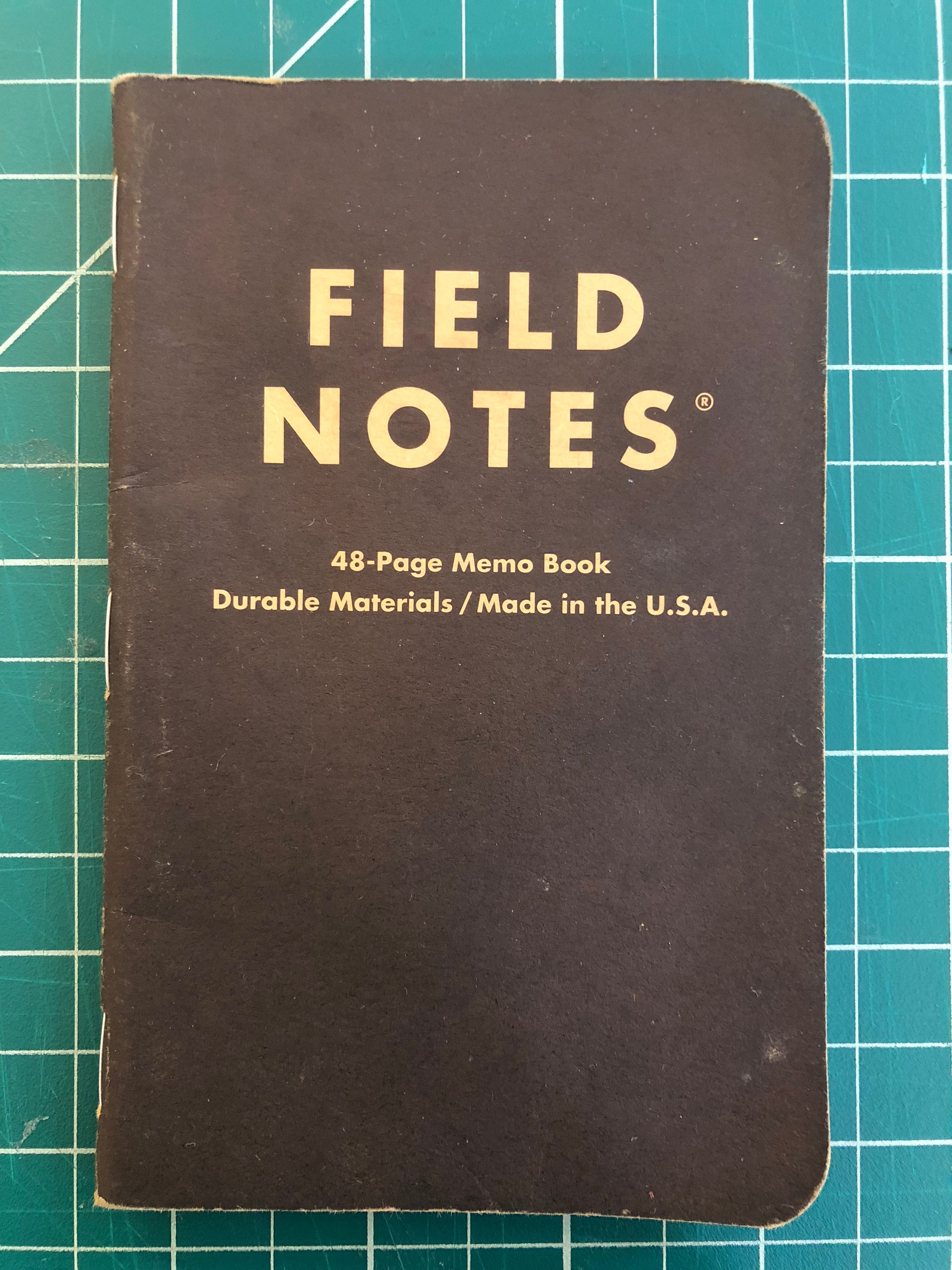
Build: Daily Log · Principle: “I’m not writing it down to remember it later, I’m writing it down to remember it now.” Fieldnotes (the other ones)
Why Build This?
You might already use Day One, Notion, Bear, or any of the dozens of journaling apps available. They are polished, they sync across devices, and they offer prompts, templates, mood tracking, and habit streaks.
They also gamify your thoughts in ways that subtly distort the practice. Streak counters create guilt when you skip a day. Prompts channel your thinking into predefined patterns. Subscription models mean your journal might disappear if you stop paying.
Masahiro Mori, the roboticist who wrote The Buddha in the Robot, observed that the most revealing quality of a well-designed machine is its capacity for selfless devotion, the way it performs its function without ego, without seeking recognition, without trying to become more than what it needs to be. A journaling tool should aspire to the same quality: it should hold space for your thoughts with quiet, egoless reliability, never inserting itself between you and the practice. The commercial journaling apps fail this test precisely because they cannot resist making themselves the centre of attention.
The tool you are building here respects the practice by leaving it alone. No prompts telling you what to write, no streaks making you feel bad about natural rhythms, no features you did not ask for, and no subscription that might end and take your writing with it. What you get is a text box, a timestamp, and your thoughts, all stored locally on your machine, always available, and completely private.
Jean Boulton, whose work on complexity theory explores how organic systems develop and sustain themselves over time, argues in The Dao of Complexity that stability does not come from rigid control but from ongoing interaction, from the accumulated effect of small, repeated acts that gradually give rise to emergent patterns. A daily log is a perfect example of this in action, because no single entry means very much on its own, but the ongoing practice of writing day after day creates something you could never have planned in advance: a picture of your own mind over time, a living record of what you cared about, what you noticed, and how your attention shifted across weeks and months.
What You’ll Build
A simple journal where you write daily entries with timestamps, no prompts, no streaks, and no gamification. Just a place to put your thoughts and see them accumulate.


Features:
Write an entry with today’s date auto-filled
See all your past entries, most recent first
Search through entries
Calendar view showing which days you wrote
Storage: localStorage, so all data stays on your device
🔒 The rest of this post is for paid subscribers.
Subscribe to get:
Complete step-by-step instructions
All troubleshooting guidance
Copyable prompts and templates
Extension ideas and advanced features
